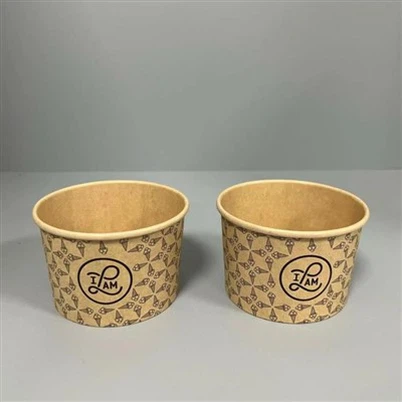

How to Co-Develop Products with Paper Ice Cream Cups Manufacturers?
Leave a message
In the modern frozen dessert industry, product success depends not only on taste but also on presentation, sustainability, and customer experience. As more brands adopt Paper Ice Cream Cups to replace plastic alternatives, collaboration between ice cream brands and cup manufacturers has become a strategic necessity-not just a transaction.
Co-developing packaging products with specialized paper cup manufacturers ensures the final result reflects your brand's identity, meets environmental standards, and optimizes operational efficiency. This article explores how brands can successfully partner with manufacturers to co-create custom paper ice cream cups that align with both marketing goals and production realities.

The Importance of Co-Development in Packaging Design
Before diving into the technical process, it's essential to understand why co-development matters. Ice cream packaging isn't just about holding the product-it's about enhancing the customer's sensory and emotional experience.
Understanding the Collaborative Advantage
When you collaborate directly with paper ice cream cup manufacturers, you gain access to their engineering expertise, material science knowledge, and large-scale production insights. This collaboration bridges the gap between creative design ideas and manufacturing feasibility.
For example, a brand might envision a minimalist cup design with embossed texture, but the manufacturer can advise whether such a finish will withstand condensation from frozen desserts. Together, they can find a balance between design innovation and practical performance-reducing trial errors, saving costs, and improving time-to-market.
Step 1: Define Brand Objectives and Product Requirements
The foundation of successful co-development lies in clarity. Before engaging with a manufacturer, brands must articulate who they are, what they need, and how they want customers to feel when holding their paper cup.
Aligning Product Vision with Brand Strategy
Start by defining the following:
Target audience: Who is your customer-families, health-conscious adults, or premium dessert lovers?
Brand values: Do you prioritize eco-friendliness, affordability, or luxury appeal?
Use environment: Will the cup be used for dine-in, take-out, or events?
A clear understanding of these aspects allows manufacturers to recommend the right cup volume, GSM (paper weight), coating type, and printing techniques. For instance, a brand aiming for sustainable luxury might choose compostable paper ice cream cups with a matte finish and water-based inks-signaling both quality and environmental responsibility.
Step 2: Material and Structural Collaboration
Once goals are defined, the next stage involves engineering the product itself-selecting the best materials, coatings, and structural design for your use case.
Choosing the Right Material Composition
Manufacturers provide a range of material options:
Single PE-coated paper: Durable and moisture-resistant, ideal for cold desserts.
PLA-coated paper: Biodegradable and compostable, suitable for eco-conscious brands.
PE-free recyclable paper: Supports full recyclability and sustainability certifications.
Your paper ice cream cup manufacturer can also adjust GSM (grams per square meter) to achieve a specific balance between rigidity and cost efficiency. For example, thicker paper is more premium and resistant to deformation, while lighter paper may benefit high-volume, cost-sensitive operations.
Collaboration at this stage ensures the chosen materials align with both functional performance and sustainability targets.

Step 3: Prototyping and Testing for Real-World Use
Even the most innovative cup design can fall short without proper prototyping and testing. Co-development allows both sides to test early versions before mass production.
Iterative Prototyping for Optimal Results
Manufacturers typically produce digital mockups and physical prototypes based on your design specifications. These samples are tested for:
Leak-proof performance under cold and humid conditions
Stackability and dispensing compatibility for ice cream shops
Ink adhesion and color accuracy under various storage temperatures
This process not only validates product functionality but also helps refine visual details-ensuring your custom printed paper ice cream cups meet brand expectations down to the smallest detail. Early testing can prevent costly errors in large production runs.
Step 4: Custom Printing and Brand Expression
Brand identity is best communicated through visuals-logos, colors, typography, and design language. Working closely with manufacturers ensures that every element appears precisely as envisioned.
Printing Techniques That Enhance Brand Recognition
Leading paper cup manufacturers offer a range of advanced printing solutions:
Offset printing for crisp, photo-quality graphics
Flexographic printing for large-scale production with consistent color tone
Digital printing for small batches and seasonal variations
Collaborative planning ensures that print color profiles (CMYK or Pantone) align with your brand palette and that the coatings used (glossy, matte, or satin) support your desired visual effect.
Moreover, integrating QR codes or promotional designs during printing opens new avenues for consumer engagement-bridging offline and digital brand experiences.
Step 5: Ensuring Quality, Compliance, and Certification
Safety and quality control are crucial in food packaging manufacturing. A professional co-development partner will provide transparent testing and certification processes.
Maintaining Food Safety and Regulatory Compliance
Your manufacturer should meet global safety standards such as:
FDA & EU Food Contact Compliance
FSC Certification for Sustainable Sourcing
ISO 9001 / 22000 Quality Systems
During the co-development process, both sides should establish clear quality benchmarks-covering everything from cup rigidity and coating consistency to print durability. Regular audits, random sampling, and batch traceability further ensure reliability.
When manufacturers proactively share testing reports and certification documentation, it builds mutual trust and supports brand reputation.

Step 6: Streamlining Production and Supply Chain Planning
Efficient production planning is where collaborative relationships turn into long-term success. It ensures timely delivery and cost control, even during seasonal demand spikes.
Coordinating Forecasts and Logistics
Manufacturers and brands can co-plan:
Order forecasts to optimize material procurement
Lead time management for continuous supply
Regional warehousing to minimize freight costs
For example, a North American brand might coordinate with an Asia-based manufacturer to ship bulk paper ice cream cups quarterly while maintaining local inventory for quick distribution. Digital systems like ERP or cloud-based portals now make it easy to track production status, shipment schedules, and quality checks in real time.
This level of coordination transforms traditional supplier relationships into efficient co-development ecosystems.
Step 7: Innovation Through Continuous Feedback
Co-development doesn't end with the first batch. The best partnerships evolve through constant feedback loops and joint innovation.
Ongoing Collaboration for Product Evolution
Regular performance reviews and consumer feedback analysis allow brands to adjust their packaging designs and materials based on:
Changing market trends (e.g., eco-friendly coatings, new cup shapes)
Customer usability feedback (e.g., lid fit, texture grip)
Brand campaigns that demand special editions or limited designs
This continuous dialogue helps both manufacturer and client remain agile, competitive, and aligned with the fast-paced dessert market.
The ultimate goal is mutual growth-manufacturers improve their technological capabilities while brands enhance customer experience and loyalty.
Step 8: Leveraging Technology for Design Collaboration
Today's digital tools have revolutionized how packaging products are co-developed. Manufacturers and brands can now work together seamlessly across continents.
Digital Tools and Real-Time Collaboration
Some of the tools and technologies used include:
3D virtual modeling to visualize cup design and branding before production.
Cloud-based approval systems for real-time artwork feedback.
AR-based simulation tools allowing brands to "preview" how cups will look on shelves.
This digital integration shortens the development cycle, eliminates guesswork, and promotes transparency-key ingredients for successful long-term partnerships in the Paper Ice Cream Cups industry.

Step 9: The Future of Co-Development in the Paper Cup Industry
As sustainability and customization trends continue to grow, co-development will become the new standard for packaging production.
Emerging Trends Driving Collaborative Growth
Looking ahead, we can expect:
Bio-based coatings replacing traditional plastics entirely
Smart packaging integrating QR codes and AR experiences
Localized production networks for reduced carbon footprint
Manufacturers that embrace digitalization, eco-innovation, and client co-creation will lead the next era of paper packaging transformation.
Partnering with Haokelao Packaging for Collaborative Innovation
For brands seeking a reliable and innovative partner, Haokelao Packaging provides end-to-end co-development solutions for custom paper ice cream cups. With advanced printing technology, certified sustainable materials, and a collaborative design process, Haokelao helps brands turn ideas into tangible, market-ready packaging.
Work hand-in-hand with Haokelao Packaging to co-create the perfect paper ice cream cups for your brand-combining sustainability, creativity, and precision manufacturing.