
Type Of Disposable Meal Box
Leave a message
In recent years, the disposable fast food boxes in the market have changed from foam lunch boxes to environment-friendly lunch boxes. The original foam lunch boxes have been eliminated because they are not resistant to high temperature and the production process has caused damage to the environment. Plastic lunch boxes, paper lunch boxes, wooden lunch boxes, degradable lunch boxes, etc. Among them, plastic has become the mainstream material for manufacturing disposable fast food boxes due to its low toxicity, high melting point, strong plasticity, easy production, and relatively low cost. Such as PP plastic lunch boxes, corn starch biodegradable lunch boxes, etc., PP polypropylene has excellent mechanical and thermal properties, suitable for food packaging. PS polystyrene is rigid and brittle, non-toxic, odorless, and particularly suitable for frozen food packaging such as pastries or salads.
The foam lunch boxes on the market in the past have gradually been rejected by consumers due to their lack of environmental protection and reduced usage.
Meal boxes are divided into environmentally friendly ones, mainly made of plastic, paper, starch, and rare metals.
Plastic disposable lunch box
Disposable food containers made of plastic mainly include PP polypropylene and PS polystyrene, both of which are non-toxic, odorless, and have a soft texture. Generally, PP is used at a temperature of -6 ° C to+120 ° C, making it particularly suitable for holding hot rice and vegetables. It can be heated in a microwave or even steamed in a steam oven. Modified PP can be used at a temperature of -18 ° C to+110 ° C. These lunch boxes made of PP can be heated to 100 ° C and stored in a refrigerator for refrigeration.
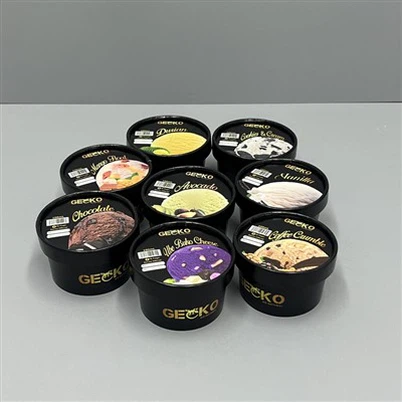
PS is relatively hard and transparent, but it is easy to tear. PS begins to soften when used at a temperature of 75 degrees, so it is not suitable for holding hot meals and dishes. However, PS has good low-temperature performance and is the best packaging material for ice cream.
Some lunch box factories use PP for the box and PS for the lid in order to reduce costs. The advantage is that the lid is transparent and PS is harder, which can be made of thinner sheets to reduce costs. However, consumers must understand the difference between the two materials and remember not to put the entire lunch box with the lid in the microwave oven for heating.
Cardboard disposable lunch box
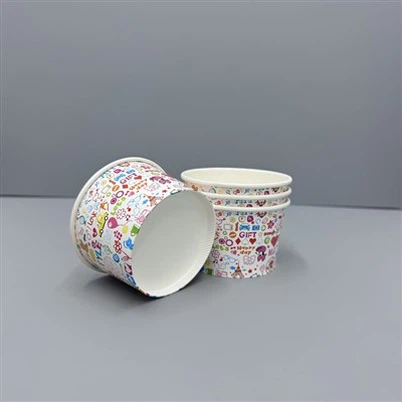
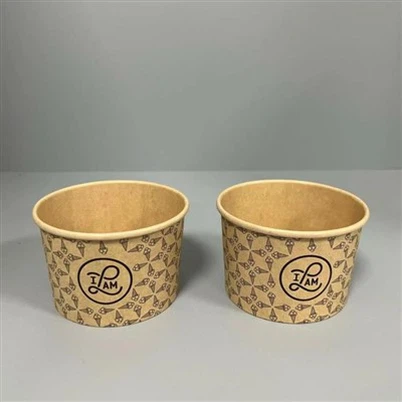
The cardboard fast food box is made from 300-350 grams of bleached kraft pulp cardboard as raw material, and is processed through stamping and forming processes similar to sheet metal processing, such as die-cutting bonding or die-cutting pressing, and shaping. To prevent oil or water leakage, it is necessary to apply a film or chemical additives on its surface. It is non-toxic and has no side effects on the human body during production and use. But the quality requirements for cardboard are high, and the cost also increases accordingly.
Starch type disposable lunch box
An edible fast food box made from starch, as the name suggests, is made from starchy plants, added with dietary fiber and other edible additives, and stirred and kneaded. It is refined using techniques such as biological compounding, polysaccharide cross-linking, and calcium ion chelation. The operating temperature ranges from -10 ° C to+120 ° C, making it particularly suitable for holding hot rice and dishes. It can be heated in a microwave or refrigerated.
Pulp molded disposable lunch box
Wood pulp or fiber pulp of annual herbaceous plants such as reeds, bagasse, wheat straw, and rice straw are crushed and purified, and then mixed with appropriate non-toxic chemical additives to form, dry, shape, shape, cut edges, and disinfect. The aesthetic appeal of the product is not high, and it also increases the pollution of wastewater.
Plant fiber disposable lunch box
In terms of environmental advantages, plant fiber meal boxes have obvious advantages. They are made from plant fibers extracted from straw, rice husks, sugarcane bagasse, etc., and mixed with molding agents, adhesives, water-resistant agents, and other additives through a molding machine. They are then dried, shaped, disinfected, and processed in the later stages. These agricultural waste materials can be used as industrial raw materials, which contributes to the comprehensive utilization of agricultural resources.
Degradable plastic lunch box
The manufacturing material of such disposable meal boxes is biodegradable plastic, which refers to the addition of a certain amount of additives such as photosensitizers, starch and other raw materials in the production process of plastic. In this way, biodegradable plastic products can be decomposed from their complete shape into fragments after being used and exposed to nature for three months, thus improving the environment.
Biodegradable disposable food box
Biodegradable disposable lunch boxes are a relatively advanced and environmentally friendly product.
It uses starch as the main raw material, adds one-year growth period plant fiber powder and special additives, and is processed by chemical and physical methods to make a fully biodegradable fast food box. Due to starch being a biodegradable natural polymer, it is broken down into glucose by microorganisms and ultimately into water and carbon dioxide.
In addition, the material blended with it is also a fully degradable material, so it can be said that it has no impact on the environment.
The main sources of starch production raw materials can be one-year growing plants such as corn, potatoes, sweet potatoes, cassava, etc.
Naturally, most of the biodegradable production materials are food crops, which can completely replace the foam lunch box without any pollution to the environment.